Recovery gear is the one part of a 4x4 kit where a wrong choice or a wrong attachment point can kill someone. A snatch strap or kinetic rope stores a lot of energy when it stretches; if a recovery point, tow ball or shackle fails, that energy sends metal and rope back towards the vehicles and anyone standing nearby.
This page compares six items: a snatch strap, a kinetic rope, two soft shackles and two sets of traction boards. We have not tested or used any of them. Figures come from each maker's own product page (linked on each row), checked on 15 October 2026. The safety advice is drawn from the makers' instructions and from Queensland's Office of Fair Trading, whose guidance on recovery straps is public and specific. We couldn't find an equivalent South African consumer guide, which is why we use it. None of this replaces a practical 4x4 recovery course.

The table
| Model | Type | Published strength rating | Length / size | Weight | Material | Stretch (elongation) | Source |
|---|---|---|---|---|---|---|---|
| Recovery Strap 8000 kg (ARB705)ARB | Snatch strap (flat webbing) | 8,000 kg, listed as "max. load" | not published | 2.3 kg | Nylon | 20% | arb.com.au |
| Kinetic Rope (10 m)MAXTRAX | Kinetic rope | MBS 12,000 kg | 10 m × 24 mm (2 m, 3 m and 5 m also listed, same MBS) | 4.3 kg | Nylon 66 and polyester | Up to 30% | maxtrax.com.au |
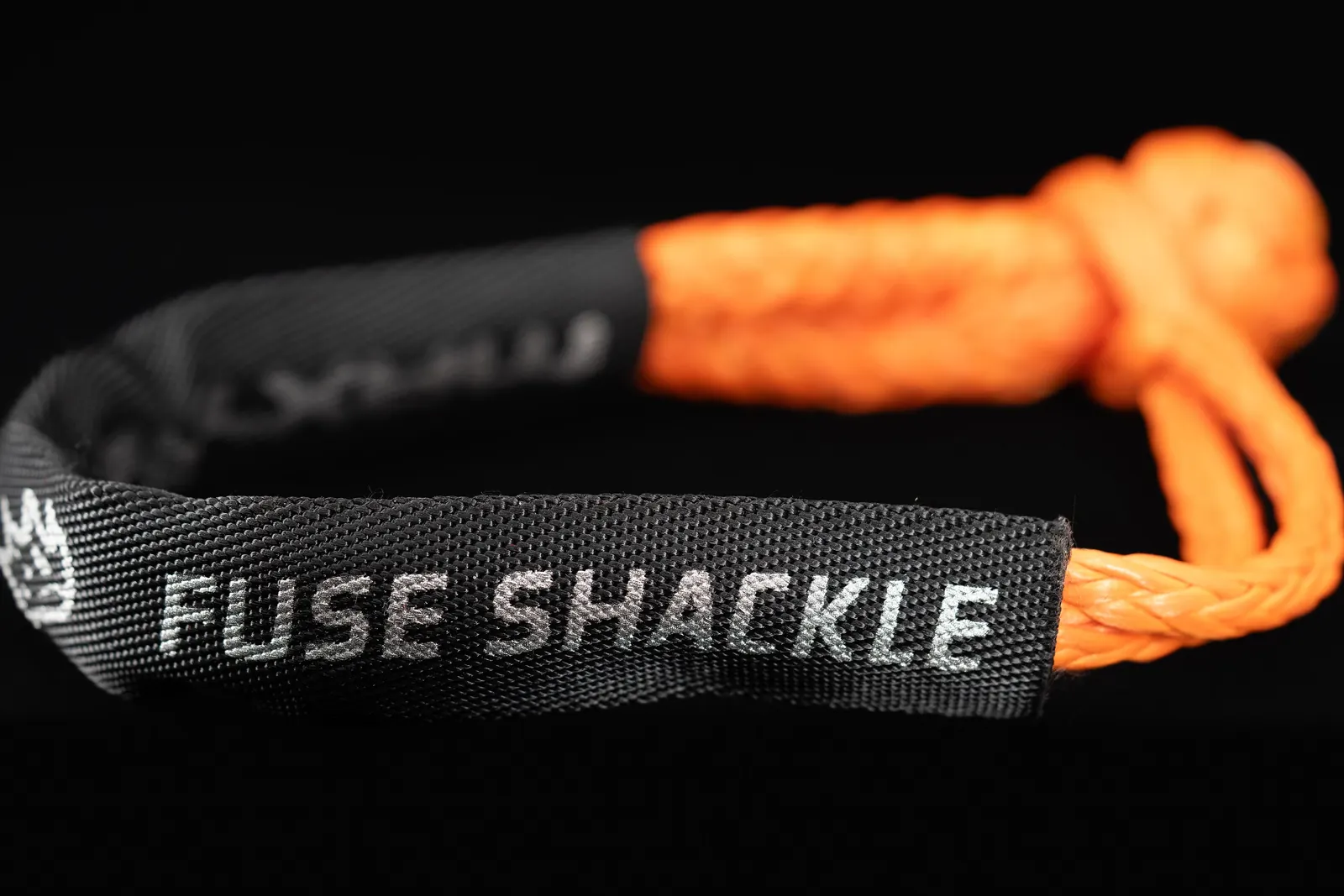
| Fuse ShackleMAXTRAX | Soft shackle | MBS 7,000 kg | 550 mm | 120 g | UHMWPE and polyester | Not published | maxtrax.com.au |
| Soft Shackle 10T (REQU172)Front Runner Series (Dometic) | Soft shackle | Break load 10 t; safe working load 2.5 t | 600 mm (230 mm inner length closed) | 0.11 kg | not published | Designed not to stretch under load | dometic.com |
| MKIIMAXTRAX | Traction boards (pair) | No load rating published | 1150 × 330 × 85 mm per board; a pair stacks to 95 mm | 3.4 kg per board | UV-stabilised reinforced nylon | Not applicable | maxtrax.com.au |
| TRED ProTRED | Traction boards (pair) | Max 2,250 kg per axle, or a vehicle up to 4,500 kg | 1160 × 330 × 65 mm per board; a pair stacks to 85 mm | 8.2 kg per pair (the same page's comparison table says 8.0 kg) | Engineered nylon blend | Not applicable | tredoutdoors.com |
- ARB Recovery Strap 8000 kg (ARB705): ARB says the strap is certified to Australia's Consumer Goods (Motor Vehicle Recovery Straps) Safety Standard 2017 and has reinforced eyes with a protective sleeve.
- MAXTRAX Kinetic Rope (10 m): MAXTRAX says its strength and stretch drop when the rope is soaked with water.
- MAXTRAX Fuse Shackle: MAXTRAX designs this as the intended weakest link in its own recovery system, and says that system hasn't been tested with other brands' products.
- Front Runner Series (Dometic) Soft Shackle 10T (REQU172): Dometic's page says not to attach it to a bumper, trailer hitch ball or sharp-edged tow point.
- MAXTRAX MKII: MAXTRAX says the boards were tested at the University of Queensland wrapping around a 33-inch tyre without breaking.
- TRED TRED Pro: TRED lists a working temperature range of -15 °C to 70 °C and a lifetime warranty.
Reading the table
Minimum breaking strength (MBS) and working load limit
Minimum breaking strength is the load at which a new item is expected to fail. Safe working load (or working load limit) is a much lower figure the maker considers safe for repeated use. Dometic's soft shackle shows the gap clearly: 10 t break load, 2.5 t safe working load. Don't compare one maker's MBS with another's working load. ARB's page lists 8,000 kg as a "max. load" without saying whether that's the breaking strength, so ask before you rely on it.
Matching strength to your vehicle
Queensland's Office of Fair Trading says a recovery strap's minimum breaking strength must be at least double the gross vehicle mass (GVM) of the lighter of the two vehicles. MAXTRAX recommends between two and three times the GVM. Your GVM is on the vehicle's licence papers or the plate in the door frame. MAXTRAX's range works as an upper limit too: a strap or rope rated far above your vehicle's weight is not automatically the safer choice, so match it to the vehicle rather than buying the strongest one available.
Stretch: snatch strap versus kinetic rope
Both work by stretching and then pulling back, which is what turns the recovering vehicle's movement into a pull. ARB lists 20% stretch for its webbing strap; MAXTRAX lists up to 30% for its rope. More stretch generally means a softer, more gradual pull. Both store energy, so both need a damper and a clear area. Neither should be used for lifting or ordinary towing.
Soft shackles
Soft shackles are far lighter than metal bow shackles (Dometic's weighs 0.11 kg), but synthetic fibre can be cut by sharp edges and weakened by wear. Both makers here tell you to inspect them before every use. MAXTRAX deliberately rates its Fuse Shackle lower than its rope (7,000 kg against 12,000 kg) so that, if its system is overloaded, the shackle fails first, and it says that system is designed and tested only with its own products.
Traction boards
Boards aren't rated like straps. TRED publishes a load rating (2,250 kg per axle, 4,500 kg vehicle), MAXTRAX doesn't publish one for the MKII. Length, weight and how they mount on your rack are the practical differences. A pair weighs 6.8 kg for the MKII (2 × 3.4 kg, our calculation) and 8.2 kg for the TRED Pro.
Buying guide
Never use a tow ball or tie-down point as a recovery point
Queensland's Office of Fair Trading is direct about this: never attach a recovery strap to a standard tow ball or a vehicle's tie-down point, because they aren't strong enough and can break off and cause injury or death. Dometic's soft-shackle instructions say the same about bumpers, hitch balls and sharp-edged tow points. Use only rated recovery points, either factory-fitted ones your vehicle manual identifies for recovery, or aftermarket points rated for the job and properly fitted. If your vehicle has neither, fit them before you need them.
Use a damper and clear the area
Drape a recovery damper, heavy bag or blanket over the strap or rope to reduce rebound if something breaks (Queensland Fair Trading and MAXTRAX both say this). Before the pull, passengers must get out of both vehicles. Queensland's guidance says bystanders should be at least 1.5 times the unstretched strap length away; MAXTRAX adds that people should stay out of the path of the recovering vehicle. Start gently by taking up slack, and only add a little more momentum on each try.
Check shackles and connections are strong enough
Queensland's guidance says any shackle used should have a working load limit higher than the strap's minimum breaking strength. Every part of the chain counts: the recovery point, the shackle and the strap. The weakest part is the one that fails.
Inspect before every use, and retire damaged gear
Don't use a strap, rope or soft shackle that is cut, frayed, burnt, melted or worn, or one that has lost its label. Rinse off sand and mud with fresh water and let it air-dry, as both MAXTRAX and Dometic advise. Wet gear is weaker: MAXTRAX notes that strength and stretch drop when its rope is soaked.
Try the low-energy options first
Before reaching for a strap: let tyre pressures down to suit the sand (within your tyre maker's guidance), dig out in front of the wheels, and use traction boards. MAXTRAX notes that using boards as a ramp greatly reduces the load on all the other equipment if you do need to pull.
Get trained
Both Queensland Fair Trading and MAXTRAX recommend a 4x4 training course before using recovery straps. In South Africa, look for a recognised off-road training provider or your local 4x4 club. A morning on a course is worth more than any upgrade in this table.